Android Teaches Cats to Remember Where They Hid the Keys
Android learns to remember misplaced objects, calm moving screens and share lists; the cats demand tuna-based licensing.

Cat parody / satire: The feline officials, dialogue and events below are fictional. The Android features described in the final section are real.
Android Teaches Cats to Remember Where They Hid the Keys
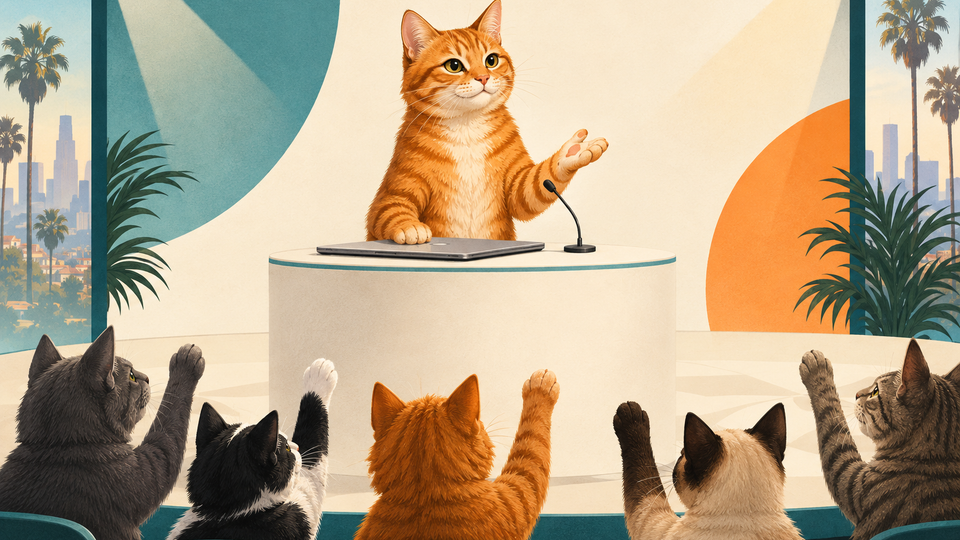
PAWLO ALTO—After centuries of blaming humans, furniture and “the general decline of household standards,” the International Federation of Cats has admitted that nobody remembers where the spare key went.
The confession followed news of Android features that can help people record where they left ordinary objects. Within minutes, the federation opened an emergency technology summit beneath a sofa, chosen because it already contained three bottle caps, a receipt from 2024 and one earring whose owner had given up hope.
“This is not about forgetfulness,” declared fictional federation chair Marmalade S. Whisker, carefully moving the missing key behind a cushion. “It is about strategic redistribution. Nevertheless, if a phone wishes to remember our strategy, we will permit it—subject to a tuna-based licensing arrangement.”
Delegates tested the idea by telling an assistant where they had placed passports, chargers and ceremonial toy mice. The first trial succeeded beautifully. The second produced a constitutional crisis when the assistant revealed that the red dot was not, in fact, stored anywhere. It was merely light.
A separate committee examined Motion Assist, which places moving visual cues over a phone screen for passengers who feel queasy in vehicles. The cats approved the concept after a bus demonstration, although several demanded that the bubbles move faster and become physically catchable.
“At last, the rectangle acknowledges that the room is moving,” said Professor Mittens, a fictional vestibular-policy expert who spent the entire journey facing backward. “For years, humans stared at perfectly still screens while buses turned corners. Cats solved this long ago by sleeping through the trip.”
The summit also considered Guided Vision, a forthcoming Gemini Live feature designed to describe what a phone camera sees. Accessibility delegates welcomed the practical goal. The feline cabinet immediately proposed additional descriptions, including “the bowl is only half full,” “the forbidden shelf remains structurally accessible,” and “the human is opening a laptop and therefore requires supervision.”
Then came collaborative Google Keep notes inside Messages. This triggered the day’s fiercest negotiations. One household’s shared shopping list began with milk, bread and detergent, but cats from seven regions simultaneously added tuna. A compromise list containing tuna, tuna and “maybe detergent” passed by a landslide.
Chat themes proved less controversial. Every conversation was assigned either cream, teal or orange, except the family group chat, which received the traditional theme known as Thirty-Seven Unread Messages About Dinner.
By sunset, the federation issued its final communiqué: technology may remember where objects are, help passengers manage motion discomfort, describe surroundings and organize lists—but it still cannot explain why a cat walks into a room and immediately forgets the mission.
“That,” Marmalade said, settling onto the recovered passport, “is not a bug. It is privacy.”
The real news behind the joke
Google announced its September Android Drop on September 1, 2026. The company described five additions: a Gemini-linked Find Hub feature for remembering where untagged items were placed; Motion Assist, which uses a moving screen overlay intended to help reduce motion sickness; Guided Vision in Gemini Live, which describes surroundings through the camera; Google Keep collaboration inside Google Messages; and customizable chat themes.
Availability differs by feature and device. Google says Guided Vision is coming to Android 9 and newer in countries where Gemini is available. Independent coverage from Thurrott reports that Motion Assist is for Android 17, remembered items are coming to Android 16 and newer where supported, and chat themes are available now. Rollouts may vary, and Motion Assist should not be treated as a guaranteed medical remedy.
Sources: Google’s official September Android Drop announcement (September 1, 2026); Thurrott’s independent summary.
Illustration disclosure: The feature image is AI-generated artwork created for this fictional cat-news satire.